
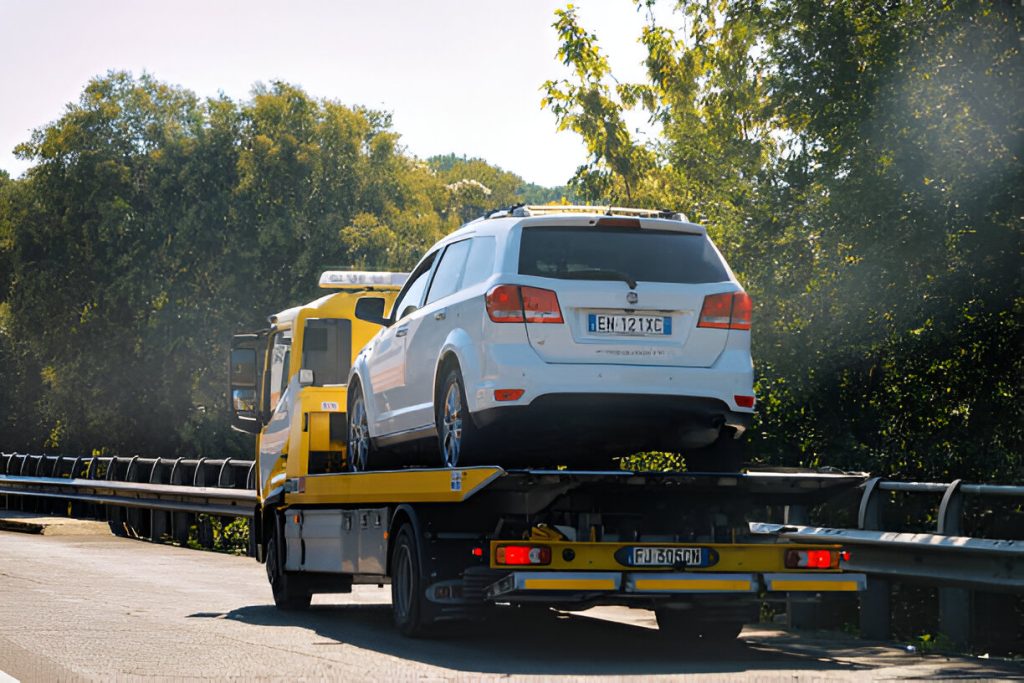
Finding your vehicle missing from a private parking lot can be frustrating, especially when you were not expecting it to be towed. In New York City, private-property towing is permitted in certain circumstances, but property owners and towing companies must follow specific rules.
So, can a car be towed from a private parking lot in NYC?
Yes, but not simply because the property is privately owned. NYC has requirements concerning parking signs, authorization, towing operators, vehicle information, and charges. Understanding these requirements can help you determine what happened if you return to a parking lot and discover that your vehicle is gone.
When Can a Car Be Towed From a Private Parking Lot in NYC?
A vehicle can be towed from private property when it is parked in violation of the property’s parking restrictions and the requirements for a private-property tow have been met.
Private parking facilities can include apartment building parking areas, commercial lots, shopping centers, business properties, and other privately controlled spaces.
The property owner or authorized agent cannot simply tell a tow company to remove a vehicle without following the applicable rules. NYC requires specific procedures for private-property towing, including authorization for the particular vehicle being removed.
This is important because seeing a sign that says “Unauthorized Vehicles Will Be Towed” does not mean every possible towing procedure is automatically satisfied.
If you discover your car towed from private lot NYC, start by looking at the signs around the property and determining what parking restriction applied to your vehicle.
What Signs Are Required in a Private Parking Lot?
Parking signs are an important part of private-property towing in New York City.
Private parking facilities subject to the city’s towing rules must display required information in a conspicuous location. The information generally includes the identity and contact information of the tow operator, redemption hours, applicable towing and storage charges, and the hours during which vehicles are prohibited from parking and may be towed.
These details give drivers an opportunity to understand the consequences of leaving a vehicle on the property.
If you believe your vehicle was improperly removed, photograph the signs as soon as possible. Include signs at the entrance as well as signs close to the parking space.
This can be especially useful when the wording of the signs is unclear, damaged, missing, or difficult to see.
Does the Property Owner Have to Authorize the Tow?
Yes.
Private-property towing in NYC requires express written authorization from the property owner or an authorized agent.
The authorization applies to the specific vehicle being removed. It includes identifying information such as the vehicle’s location, make, model, color, and license plate number. The authorization also records information about when the tow was requested and who authorized it.
This requirement is designed to establish a record showing that the vehicle was actually identified for removal by someone with authority over the property.
A towing company should not simply arrive at a private lot and decide which vehicles to remove.
If your car towed from private lot NYC situation involves a dispute over authorization, ask the towing company or property representative for the relevant paperwork.
Can an Occupied Vehicle Be Towed?
NYC’s private-property towing rules provide an important protection for occupied vehicles.
A vehicle cannot be removed from private property under the applicable private-property towing provision while it is occupied by a person.
This does not mean that every parking dispute can be resolved by remaining inside the vehicle. Drivers should never put themselves in danger by physically confronting a tow operator.
If a tow is being attempted while you are inside your vehicle and you believe something is wrong, remain calm, document the situation when it is safe to do so, and contact the appropriate authorities or city services for guidance.
How Much Does a Private Parking Lot Tow Cost in NYC?
NYC places limits on charges for private parking lot towing.
The city’s current consumer guidance lists a maximum charge of $125 for the tow and the first three days of storage. After those initial three days, storage is capped at $15 per day.
There is also a maximum $62.50 drop fee when a vehicle has been connected for towing but the tow has not yet been completed and the vehicle is released.
| Private-Lot Towing Charge | NYC Maximum |
|---|---|
| Tow plus first 3 days of storage | $125 |
| Storage after the first 3 days | $15 per day |
| Drop fee when tow is not completed | $62.50 |
These figures apply to the private parking lot towing category. They should not automatically be applied to every type of vehicle tow in New York City.
For example, an NYPD tow, an accident-related tow, or a tow connected to certain parking violations may operate under different rules and fee structures.
What Should You Do If Your Car Was Towed?
If you return to a private parking lot and your vehicle is gone, do not assume that it was stolen.
First, look around the property for towing signs. A sign may provide the name and telephone number of the towing company and information about where vehicles are stored.
Once you identify the towing company, contact it to find out whether your vehicle is being held and where it can be retrieved.
Have your vehicle information available, including the license plate number, make, model, and color.
You should also ask about:
-
The location where the vehicle is being stored
-
The reason for the tow
-
The towing and storage charges
-
The documents required to retrieve the vehicle
-
The property’s authorization for the tow
-
The company’s redemption hours
Keep copies or photographs of any paperwork you receive.
Document the Parking Lot Before You Leave
If you think the tow may have been improper, documentation can become important.
Take photographs of the parking area and any signs you can find. If possible, photograph the entrance, the space where your vehicle was parked, and the signs closest to that space.
You should also keep the towing receipt and any written authorization or paperwork provided by the towing company.
If you notice damage to the vehicle, photograph it before making repairs. Record when you collected the vehicle and what condition it was in when you received it.
A clear record can make it easier to explain what happened if you later need to dispute the tow or charges.
Private Parking Lot Tow vs. NYPD Tow
One of the most important things to understand is that a private-property tow is not the same as an NYPD tow.
A private-property tow generally relates to parking on privately controlled property in violation of that property’s restrictions.
An NYPD tow can occur for violations involving public streets and other circumstances governed by city parking enforcement. Vehicles can also be towed in connection with certain unpaid parking violations and judgments.
The process for locating, retrieving, or contesting the vehicle can therefore depend on who ordered the tow and why.
If you are trying to locate a missing vehicle, determining whether it was removed from private property or by a city agency should be one of your first steps.
Can You Challenge a Private-Property Tow?
If you believe your vehicle was towed improperly, you can investigate the circumstances and raise the issue with the appropriate company or city agency.
Start by gathering evidence.
Check whether the required parking signs were present and readable. Find out whether the property owner or authorized representative requested the tow. Review the towing paperwork and compare the charges with the applicable NYC limits.
You can also contact NYC’s Department of Consumer and Worker Protection or call 311 for information about towing complaints and consumer protections.
The important thing is to separate a parking disagreement from a potentially improper tow. A vehicle being parked somewhere the owner did not want it does not automatically answer whether the required towing procedures were followed.
What If the Tow Company Damaged Your Vehicle?
Vehicle damage is a separate issue from whether the original tow was authorized.
If you discover damage after retrieving your vehicle, document it immediately. Take clear photographs from multiple angles and keep the towing receipt and other relevant paperwork.
Write down what you noticed and when you noticed it.
If the vehicle was already damaged before the tow, having photographs from before the vehicle was removed can help establish its condition. If there was no previous damage, photographs taken immediately after retrieval can provide useful evidence.
Do not rely only on memory. A dated photographic record can be much easier to evaluate later.
How Drivers Can Avoid a Private-Lot Tow
The simplest way to avoid a private-property towing dispute is to understand the parking restrictions before leaving your vehicle.
Pay attention to signs concerning:
-
Permit requirements
-
Customer-only parking
-
Reserved spaces
-
Loading zones
-
Parking hours
-
Overnight restrictions
-
Fire lanes
-
No-parking areas
-
Tow-away warnings
Do not assume that a parking space is available simply because it is empty.
Private lots can have restrictions that are different from the rules on the surrounding public streets. When in doubt, read the posted information before leaving the vehicle.
What If You Need a Tow in NYC?
Private-property towing and emergency towing are two different situations.
If your vehicle breaks down, is involved in a collision, has a flat tire, or cannot safely continue driving, you may need a licensed towing provider to move it.
Before accepting service, confirm where the vehicle is being taken and understand the applicable charges. If your vehicle has special requirements, such as being heavily damaged or difficult to access, tell the towing company before the truck arrives.
For drivers dealing with a car towed from private lot NYC, knowing the difference between a legally authorized private-property tow and a standard roadside towing request can also prevent confusion.
Get Towing Assistance From A1 Towing & Collision Inc.
When your vehicle needs towing after a breakdown, collision, or roadside problem, having a reliable local towing provider can make a difficult situation easier to manage.
A1 Towing & Collision Inc provides towing and collision-related assistance in New York City. When arranging service, drivers should provide accurate information about the vehicle, its location, and the problem so the appropriate towing equipment can be dispatched.
If your vehicle has already been removed from a private parking lot, remember that the legal authority for that removal is a separate matter. Check the property’s signage, ask for the relevant authorization and paperwork, and make sure you understand where the vehicle has been taken and what charges apply.
Knowing your rights and keeping good records can help you handle a private-property towing situation with considerably less confusion.